
Introduction
John D. Rockefeller was one of the most influential businessmen in American history, widely recognized for building an enormous fortune through the petroleum industry and founding the Standard Oil Company. Born on July 8, 1839, in Richford, New York, United States, Rockefeller rose from a modest family background to become one of the wealthiest individuals of his time. His remarkable business achievements, disciplined approach to money management, and strategic decisions helped transform the American oil industry and established his reputation as a pioneer of modern corporate business.
John D. Rockefeller became widely recognized as the world’s first billionaire in 1916, after reports placed his fortune above one billion dollars. His success came primarily from expanding Standard Oil, improving the efficiency of petroleum refining, and building an extensive business network. However, his rise to wealth was not without controversy, as critics accused Standard Oil of using unfair business practices to dominate the market. In 1911, the United States Supreme Court upheld the company’s breakup under antitrust law, making Rockefeller’s business empire an important part of American economic and legal history.
Beyond his business achievements, Rockefeller was also known for his commitment to philanthropy, religious faith, and support for education, medical research, and public health. Through charitable giving and institutions associated with his name, he helped shape the development of organized philanthropy in the United States. Although he died on May 23, 1937, at the age of 97, his legacy continues to attract attention from historians, entrepreneurs, students, and readers interested in wealth creation and business leadership. Understanding John D. Rockefeller’s biography provides valuable insight into his early life, career, family, fortune, controversies, and lasting influence on the modern world.
Early Life of John D. Rockefeller
John Davison Rockefeller was born on July 8, 1839, in Richford, New York, United States, into a family of six children. He was the second child of William Avery Rockefeller and Eliza Davison Rockefeller. His father worked as a travelling salesman, while his mother was a homemaker who emphasized discipline, religious faith, honesty, and careful management of money. Growing up in a household where financial security was not always guaranteed helped shape Rockefeller’s interest in saving, responsibility, and business from an early age.
During his childhood, Rockefeller’s family moved several times before eventually settling in the Cleveland area of Ohio. His father’s frequent absences meant that his mother played a significant role in maintaining the household and teaching the children important values. Rockefeller reportedly began earning and saving small amounts of money while he was still young, developing habits of recordkeeping and financial discipline that would later become central to his business career. These early experiences encouraged him to think carefully about expenses, profits, and the importance of planning for the future.
As Rockefeller grew older, he became increasingly interested in commerce and practical business activities. He attended school in Cleveland, where he developed the basic skills needed for employment, and later pursued commercial studies to improve his understanding of accounting and business administration. Rather than following a traditional university path, he focused on preparing himself for work in the business world. In 1855, at approximately 16 years old, he obtained a position as an assistant bookkeeper at a commission merchant’s business in Cleveland. This first professional opportunity marked the beginning of his journey from a young employee to one of the most influential industrialists in American history.
Education of John D. Rockefeller
John D. Rockefeller received his early education in New York before continuing his studies after his family moved to Ohio. During his youth, he attended local schools and later enrolled at Central High School in Cleveland, where he studied subjects that helped prepare him for a future in business. His education took place during a period when formal schooling and commercial training were important pathways into employment, particularly for young people interested in trade and finance. Rockefeller developed an interest in practical knowledge and the skills needed to manage money, maintain records, and understand commercial transactions.
After leaving Central High School, Rockefeller pursued further studies at a commercial college in Cleveland, where he received training in bookkeeping, accounting, and business-related subjects. This practical education was particularly valuable because it equipped him with skills that could be applied directly in the workplace. Rather than attending a university for an extended period, he concentrated on learning how businesses operated and how financial records could be maintained accurately. His training helped him develop the careful, organized approach to accounting and expenditure that later became an important feature of his business management.
Rockefeller completed his formal education while still a teenager and began looking for employment opportunities that would allow him to apply his commercial knowledge. In 1855, at approximately 16 years old, he secured a position as an assistant bookkeeper with a commission merchant in Cleveland. His ability to maintain accurate records, monitor expenses, and handle financial details helped establish his reputation as a dependable young employee. Although his formal education was relatively short compared with that of many prominent business leaders, his commercial training and practical experience provided a foundation for his later success in the petroleum industry and the establishment of the Standard Oil Company.
John D. Rockefeller’s Career and Rise to Success
John D. Rockefeller began his professional career in 1855 when he secured a job as an assistant bookkeeper at a commission merchant’s business in Cleveland, Ohio. At approximately 16 years old, he demonstrated a strong ability to manage financial records, calculate expenses, and maintain accurate accounts. His first job provided valuable experience in commercial transactions and introduced him to the importance of organization, discipline, and financial planning. After gaining experience as an employee, Rockefeller decided to establish his own business. In 1859, he partnered with Maurice B. Clark to form a commission business that traded commodities and other goods. Their venture performed well, particularly during the American Civil War, when demand for supplies increased and created new commercial opportunities. This early success gave Rockefeller the financial foundation and business experience he needed to explore more profitable industries.
Rockefeller’s career took a major turn in 1863 when he entered the petroleum refining business in Cleveland, Ohio. At the time, the American oil industry was expanding rapidly, largely because kerosene was becoming an important source of lighting in homes and businesses. Rockefeller recognized that the growing demand for petroleum products offered an opportunity to build a large and profitable enterprise. He focused on refining efficiency, controlling operating costs, maintaining product quality, and improving the transportation and distribution of oil. In 1870, he established the Standard Oil Company with several associates, including Henry Flagler. Under his leadership, the company expanded by acquiring refineries, negotiating transportation arrangements, and developing an extensive distribution network. These strategies helped Standard Oil become a dominant force in the American petroleum industry and made Rockefeller one of the most powerful businessmen of the nineteenth century.
Despite his extraordinary success, Rockefeller’s business methods attracted growing criticism from competitors, journalists, and government authorities who argued that Standard Oil exercised excessive control over the oil market. Investigative journalist Ida Tarbell helped bring public attention to the company’s practices, while concerns about monopolies contributed to stronger antitrust enforcement in the United States. In 1911, the Supreme Court upheld the breakup of Standard Oil under federal antitrust law, resulting in the separation of the company into 34 entities. Although the ruling ended Standard Oil’s unified corporate structure, Rockefeller retained substantial investments in the resulting companies and remained extraordinarily wealthy. As he grew older, he gradually withdrew from active business management and devoted increasing attention to philanthropy. Through his financial support for education, medical research, public health, and scientific institutions, he established another major dimension of his career. Rockefeller died on May 23, 1937, but his influence on American industry, corporate organization, and organized philanthropy continues to be studied today.
Why Is John D. Rockefeller Trending in 2026?
John D. Rockefeller continues to attract attention in 2026 because of his remarkable journey from a young bookkeeper to one of the wealthiest businessmen in modern history. Interest in his life is closely connected to the 110th anniversary of the year he became widely recognized as the world’s first billionaire in 1916. His achievement remains a major reference point in discussions about wealth creation, entrepreneurship, investment, and the development of modern capitalism. Readers continue to explore his biography to understand how he built his fortune and how his business decisions helped transform the American petroleum industry.
Another reason Rockefeller remains relevant is the continuing debate about the power of large corporations and the consequences of monopolies. His Standard Oil Company became a dominant force in the oil industry, but its business practices also attracted criticism and legal scrutiny. In 1911, the United States Supreme Court upheld the company’s breakup under antitrust law, making the case a significant event in American business history. In an era when governments and consumers continue to discuss corporate influence, competition, and market concentration, Rockefeller’s career provides historical context for understanding these issues.
A third reason for renewed interest in Rockefeller is his philanthropic legacy and the continued work of institutions established through his wealth. During his lifetime, he supported universities, medical research, public health initiatives, and charitable organizations. The Rockefeller Foundation, established in 1913, continues to work on global challenges, although its present-day programs are managed independently of its founder. His life therefore raises important questions about how wealthy individuals can use their resources to support society and whether philanthropy can balance the wider effects of concentrated economic power.
Rockefeller is also a popular subject for readers interested in personal discipline, long-term financial planning, and business strategy. His emphasis on careful accounting, cost control, and reinvestment offers historical lessons for entrepreneurs, although his methods should be examined alongside the controversies surrounding Standard Oil. For readers in Nigeria and across Africa, his biography can provide useful context for understanding the relationship between natural resources, business ownership, economic influence, and national development. Ultimately, interest in John D. Rockefeller in 2026 reflects more than his historic fortune; it also reflects the continuing relevance of his achievements, controversies, and charitable legacy.
John D. Rockefeller’s Personal Life and Family
John D. Rockefeller married Laura Celestia Spelman on September 8, 1864. Laura, who was also known as Cettie, was a former schoolteacher and the daughter of Harvey Buell Spelman and Lucy Henry Spelman. She shared Rockefeller’s Baptist Christian faith and played an important role in his personal life, particularly in maintaining their family and supporting charitable activities. Their marriage lasted for more than five decades, until Laura died on March 12, 1915. Rockefeller often acknowledged the importance of his wife’s judgment and support, and their shared religious beliefs influenced the family’s approach to responsibility, charitable giving, and community involvement.
John D. Rockefeller and Laura Spelman had five children: Elizabeth Rockefeller, Alice Rockefeller, Alta Rockefeller, Edith Rockefeller, and John D. Rockefeller Jr. Their second daughter, Alice, died in infancy in 1870. Their other children grew up in a wealthy household, but their parents emphasized discipline, religious values, education, and responsible financial habits. Their only son, John D. Rockefeller Jr., later became a prominent philanthropist who supported projects involving education, public health, historic preservation, and cultural institutions. His descendants continued to play a role in American business and philanthropy, extending the family’s influence across generations.
Outside business, Rockefeller maintained a life shaped by religious faith, family responsibilities, and charitable work. He was known for his disciplined personal habits and his commitment to giving away a significant portion of his fortune to educational, medical, and religious causes. Although his wealth brought considerable public attention, he generally kept his private affairs away from the spotlight and spent time with his family at residences including his estate, Kykuit, in Pocantico Hills, New York. Rockefeller did not have a publicly documented fiancée before his marriage to Laura Spelman who is central to his biography; Laura was his wife and lifelong partner. His family life and philanthropic traditions remain important parts of his legacy, alongside his achievements and controversies in the oil industry.
John D. Rockefeller’s Age, Religion, Nationality, Height and Physical Appearance
John D. Rockefeller was born on July 8, 1839, and died on May 23, 1937, at the age of 97. He lived through a period of extraordinary industrial and economic change, witnessing the expansion of the American petroleum industry and the growth of large corporations. His long life allowed him to build an enormous fortune, retire from active business management, and devote much of his later years to philanthropy. Rockefeller’s achievements made him one of the most recognizable business figures of his generation, and his biography continues to attract interest from people studying wealth, entrepreneurship, and American economic history.
Rockefeller was an American by nationality and a committed Baptist Christian by religion. His faith played an important role in shaping his personal values and approach to charitable giving. He attended Baptist churches from an early age and supported religious organizations throughout his life. His Christian beliefs encouraged him to view philanthropy as a responsibility, contributing to his financial support for educational institutions, medical research, public health programs, and other charitable initiatives. Although his business career attracted controversy because of Standard Oil’s dominance, his religious convictions and charitable activities remained significant parts of his public identity.
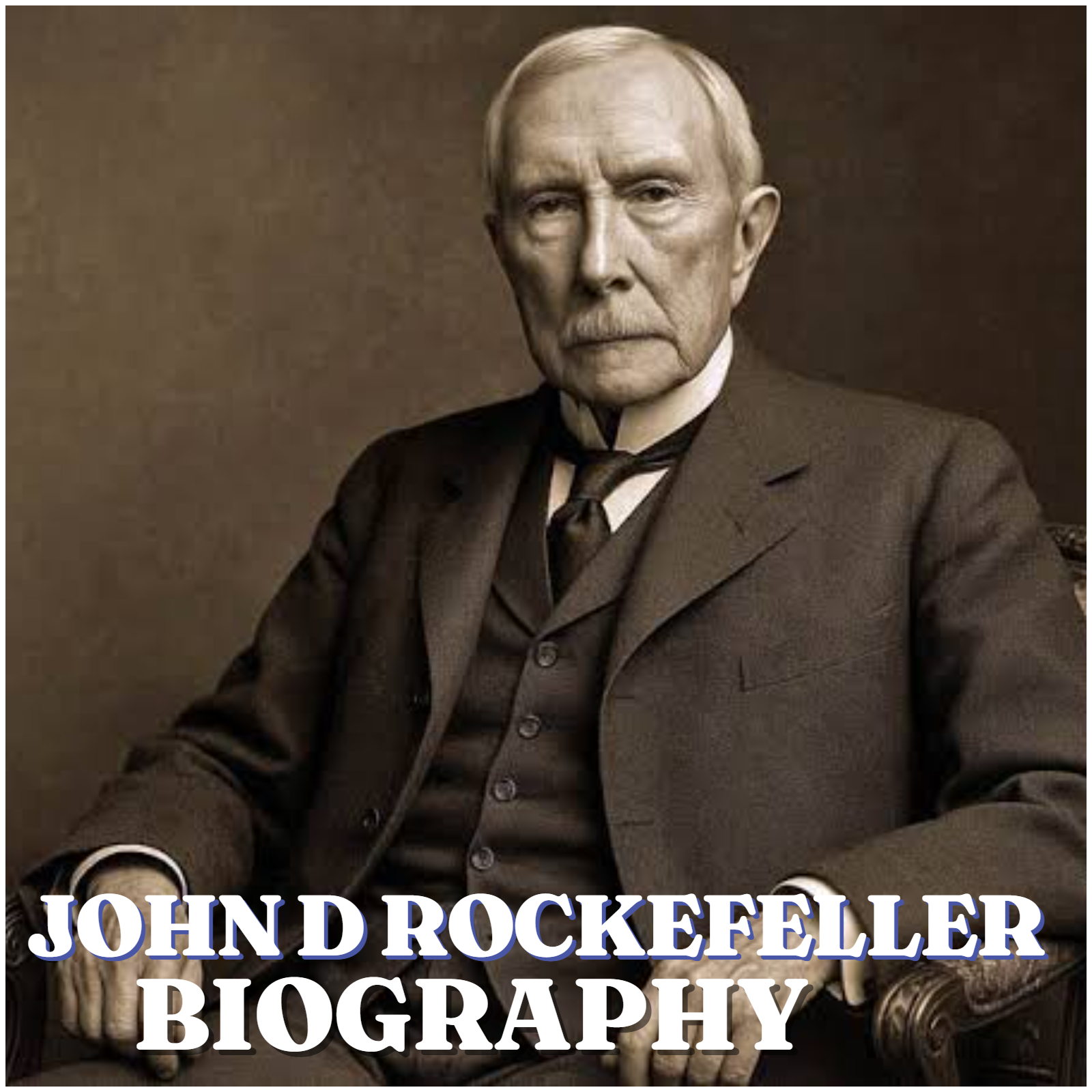
Regarding his height and physical appearance, Rockefeller was commonly depicted in historical photographs as a formally dressed businessman with a clean-shaven or neatly groomed face during different stages of his life. In his later years, he became recognizable for his bald head, thin facial features, and composed expression. Some popular biographies and online sources provide estimates of his height, but a consistently verified measurement is difficult to establish from authoritative historical records. For accuracy, his height should not be presented as a confirmed fact without a reliable source. His historical photographs nevertheless provide a clear visual record of his appearance as he grew from a young businessman into one of the most famous industrialists and philanthropists in American history.
John D. Rockefeller’s Net Worth
John D. Rockefeller accumulated his enormous fortune through the petroleum industry, particularly through his ownership of the Standard Oil Company, which he co-founded in 1870. His business strategy focused on expanding oil refining operations, reducing production costs, acquiring competing businesses, and investing in profitable enterprises. By 1916, Rockefeller had become widely recognized as the world’s first billionaire, following reports that his wealth had surpassed $1 billion. His fortune made him one of the most financially powerful individuals in American history and established his name as a lasting symbol of extraordinary wealth and business success.
At the height of his wealth, Rockefeller’s fortune was estimated at approximately $900 million in 1913, while estimates of his wealth at the time of his death in 1937 placed it at around $1.4 billion. The value of his fortune in today’s money depends on the calculation method used. Some estimates compare his wealth with the size of the American economy during his lifetime and produce figures in the hundreds of billions of modern dollars. Other inflation calculations produce considerably lower figures, so such comparisons should be treated as estimates rather than an exact modern net worth.
Rockefeller also gave away substantial amounts of money during his lifetime to support education, medical research, public health, and religious organizations. His charitable contributions helped establish and strengthen institutions such as the Rockefeller Foundation and the University of Chicago. Because he died in 1937, he does not have a current personal net worth, and the assets of his descendants and charitable organizations should not be confused with his individual fortune. His financial legacy remains significant because it demonstrates how wealth generated through industry and investment can influence business, philanthropy, and society for generations.
What Did John D. Rockefeller Do Before Becoming Famous?
Before becoming famous, John D. Rockefeller worked as an assistant bookkeeper in Cleveland, Ohio, where he developed the financial and administrative skills that later helped him build his business empire. In 1855, at approximately 16 years old, he secured his first job with a commission merchant, earning a modest salary while learning how commercial transactions, business accounts, and financial records were managed. He approached his responsibilities with considerable attention to detail and developed a reputation for being organized, disciplined, and careful with money. Rather than relying on wealth or social connections, Rockefeller used this early employment to gain practical business experience and understand how companies operated.
After gaining experience as an employee, Rockefeller decided to establish his own business. In 1859, he partnered with Maurice B. Clark to form a commission business in Cleveland, trading commodities and other goods. Their partnership exposed Rockefeller to commercial negotiations, market conditions, purchasing, sales, and the management of business expenses. The enterprise benefited from increased economic activity during the American Civil War, helping him accumulate capital and strengthen his understanding of investment and business growth. This experience was important because it allowed him to move beyond bookkeeping and begin making decisions as a business owner.
Rockefeller’s entry into the petroleum industry in 1863 marked the beginning of the career that eventually made him internationally famous. He initially invested in oil refining at a time when petroleum products, particularly kerosene, were becoming increasingly important for lighting. He recognized opportunities to improve refining efficiency and organize production and distribution more effectively. These early ventures eventually led to the establishment of Standard Oil Company in 1870. Therefore, before becoming one of the world’s wealthiest individuals, Rockefeller worked as a bookkeeper, operated a commission business, and invested in oil refining, gradually building the experience and financial resources that supported his later success.
The Most Important Event in John D. Rockefeller’s Story
The most important event in John D. Rockefeller’s story is the rise and eventual breakup of the Standard Oil Company, which transformed him from a successful businessman into one of the wealthiest individuals in modern history. Founded in 1870, Standard Oil expanded rapidly through acquisitions, improved refining operations, transportation arrangements, and an extensive distribution network. Under Rockefeller’s leadership, the company gained extraordinary influence over the American petroleum industry. His success demonstrated the power of business efficiency, strategic investment, and large-scale organization, but it also raised serious concerns about competition and the concentration of economic power.
The turning point came in 1911, when the United States Supreme Court upheld the breakup of Standard Oil under federal antitrust law. The decision resulted in the company being divided into 34 separate entities because its business practices were found to violate competition law. This event was significant because it showed that even a powerful corporation could face government action when its dominance conflicted with antitrust legislation. Rockefeller remained wealthy because he retained investments in companies resulting from the breakup, but the decision became one of the most important milestones in American corporate history and influenced later discussions about regulating large businesses.
Another important part of the story is that Rockefeller’s financial success was followed by extensive philanthropy. He directed substantial resources toward education, medicine, scientific research, and public health, helping establish institutions that continued their work after his death in 1937. Understanding the rise and breakup of Standard Oil alongside his charitable activities provides a fuller picture of his life. His story is not simply about becoming a billionaire; it is also about how concentrated wealth can reshape industries, provoke legal and public challenges, and create opportunities for philanthropy. This combination of achievement, controversy, and lasting influence is what makes John D. Rockefeller’s biography particularly important to readers today.
What Important Facts About John D. Rockefeller Are Commonly Misunderstood?
One commonly misunderstood fact about John D. Rockefeller is the idea that he became wealthy simply because he discovered oil. In reality, Rockefeller did not discover petroleum, nor was he primarily an oil-field explorer. His fortune came mainly from building and expanding the Standard Oil Company, which focused on petroleum refining, transportation, distribution, and investment. He recognized that the growing oil industry offered significant commercial opportunities and developed a business strategy centered on operational efficiency, cost control, and expansion. Understanding this distinction is important because his success resulted from business organization and financial strategy rather than the discovery of a natural resource.
Another common misunderstanding is that Rockefeller’s business empire was broken up in 1911 and that he consequently lost his fortune. The United States Supreme Court upheld the breakup of Standard Oil under antitrust law, resulting in the company’s division into 34 separate entities. However, Rockefeller retained substantial investments in the resulting companies, so the decision did not make him poor. In fact, the value of his investments remained enormous, and he continued to be recognized as one of the wealthiest people in history. The breakup is better understood as a landmark in the regulation of corporate power than as the end of Rockefeller’s financial success.
A third misunderstanding concerns Rockefeller’s reputation as a philanthropist. Although he donated substantial amounts of money to education, medicine, scientific research, and public health, his charitable activities do not erase the controversies surrounding Standard Oil’s market dominance and business practices. Both aspects of his life need to be examined to understand his historical significance. Another frequently confused detail is his billionaire status: Rockefeller became widely recognized as the world’s first billionaire in 1916, but estimates of his wealth in today’s money vary depending on whether calculations use inflation, economic output, or another measure. He died in 1937, so claims about his present-day personal net worth are misleading. Separating verified historical events from exaggerated wealth comparisons and simplified stories provides a more accurate understanding of his achievements, controversies, and lasting legacy.
Legacy of John D. Rockefeller
John D. Rockefeller left a lasting mark on American business history through his role in establishing and expanding the Standard Oil Company. His emphasis on operational efficiency, cost reduction, investment, and large-scale business organization helped transform the petroleum industry and influenced the development of modern corporations. However, his business empire also became a major example in debates about monopolies, corporate power, and fair competition. In 1911, the United States Supreme Court upheld the breakup of Standard Oil under antitrust law, making the case an important milestone in American economic and legal history. Today, Rockefeller’s career is studied both for his extraordinary commercial achievements and for the controversies surrounding the methods used to build his fortune.
Another important part of Rockefeller’s legacy is his contribution to philanthropy. Throughout his lifetime, he donated substantial sums to educational institutions, medical research, public health initiatives, and religious organizations. His financial support helped establish and strengthen institutions such as the University of Chicago and the Rockefeller Foundation, which was founded in 1913. These charitable efforts contributed to the development of organized philanthropy, demonstrating how private wealth could be directed toward long-term social and scientific goals. His son, John D. Rockefeller Jr., continued this tradition, supporting projects involving education, historic preservation, and cultural development, while later generations of the family also became involved in charitable activities.
John D. Rockefeller’s influence continues to be discussed in the twenty-first century because his life raises important questions about wealth creation, economic inequality, business ethics, and social responsibility. His achievement as the individual widely recognized as the world’s first billionaire remains a landmark in financial history, while the Standard Oil case continues to provide context for discussions about competition and corporate regulation. For aspiring entrepreneurs, his career illustrates the importance of planning, financial discipline, and strategic investment, but it also demonstrates why business success must be examined alongside its wider social consequences. His legacy is therefore complex, combining industrial innovation, immense personal wealth, controversial corporate practices, and philanthropy that continues to influence institutions long after his death.
Conclusion
John D. Rockefeller’s biography tells the story of a young bookkeeper who became one of the wealthiest and most influential businessmen in modern history through his leadership of Standard Oil and investments in the petroleum industry. Born in 1839 and dying in 1937 at the age of 97, he witnessed and helped shape a transformative period in American economic development. Although his business methods attracted criticism and led to the historic breakup of Standard Oil, his contributions to education, medicine, scientific research, and philanthropy remain significant parts of his legacy. His life continues to offer valuable lessons about ambition, financial management, corporate responsibility, and charitable giving, making him an enduring figure in the study of business history and wealth creation.
Frequently Asked Questions About John D. Rockefeller
1. Who was John D. Rockefeller?
John D. Rockefeller was an American businessman and philanthropist best known for founding the Standard Oil Company and becoming widely recognized as the world’s first billionaire in 1916.
2. When was John D. Rockefeller born?
John D. Rockefeller was born on July 8, 1839, in Richford, New York, United States.
3. When did John D. Rockefeller die?
John D. Rockefeller died on May 23, 1937, at the age of 97, in Ormond Beach, Florida, United States.
4. What was John D. Rockefeller famous for?
Rockefeller was famous for building the Standard Oil Company into a dominant force in the American petroleum industry and accumulating one of the largest fortunes in modern history.
5. What was John D. Rockefeller’s net worth?
Rockefeller’s fortune exceeded $1 billion in 1916, making him widely recognized as the world’s first billionaire. Modern estimates of his inflation-adjusted wealth vary considerably depending on the calculation method.
6. How did John D. Rockefeller make his money?
He made most of his fortune through petroleum refining, Standard Oil, business acquisitions, investments, and the expansion of oil distribution networks.
7. Who was John D. Rockefeller’s wife?
John D. Rockefeller married Laura Celestia Spelman on September 8, 1864. She was a former schoolteacher who shared his Baptist Christian faith.
8. How many children did John D. Rockefeller have?
Rockefeller and his wife, Laura, had five children: Elizabeth, Alice, Alta, Edith, and John D. Rockefeller Jr. Their daughter Alice died in infancy.
9. What was John D. Rockefeller’s religion?
Rockefeller was a Baptist Christian. His religious beliefs influenced his charitable activities and support for churches, education, and social welfare initiatives.
10. What was Standard Oil, and why was it broken up?
Standard Oil was a petroleum company founded by Rockefeller and his associates in 1870. In 1911, the United States Supreme Court upheld its breakup under antitrust law because of its unlawful restraint of trade.
11. What did John D. Rockefeller do for philanthropy?
Rockefeller donated substantial amounts of money to education, medical research, public health, and religious organizations. His philanthropy helped establish and support institutions such as the Rockefeller Foundation and the University of Chicago.
12. Was John D. Rockefeller the richest person in history?
Rockefeller is frequently described as one of the wealthiest individuals in history. Comparisons with modern billionaires depend on the method used to measure historical wealth, including inflation adjustments and wealth relative to the economy of the time.
13. What was John D. Rockefeller’s height?
A consistently verified height for Rockefeller is difficult to establish from authoritative historical records. His exact height should therefore not be stated as a confirmed fact without a reliable source.
14. What can entrepreneurs learn from John D. Rockefeller?
Entrepreneurs can learn from Rockefeller’s emphasis on financial discipline, cost management, long-term investment, and business organization. His career also highlights the importance of ethical business practices, fair competition, and corporate accountability.
15. What is John D. Rockefeller’s legacy today?
Rockefeller’s legacy includes his transformation of the petroleum industry, his role in the history of American corporate regulation, and his contributions to organized philanthropy. His business achievements and controversies continue to influence discussions about wealth, competition, and social responsibility.
SEO Details for Publishing
SEO Title: John D. Rockefeller Biography: Net Worth, Family, Career and Legacy
Focus Keyword: John D. Rockefeller biography
Suggested URL Slug: john-d-rockefeller-biography
Meta Description: Discover John D. Rockefeller’s biography, early life, education, Standard Oil career, net worth, wife, children, philanthropy, and lasting legacy in 2026.
Suggested Categories: Biography, Billionaires, Business Leaders, Entrepreneurs, Historical Figures, Philanthropists, and American History.
Suggested Tags: John D. Rockefeller, Standard Oil, Rockefeller Net Worth, Rockefeller Family, First Billionaire, Rockefeller Foundation, American Business History, and Famous Entrepreneurs.